Rabby Wallet Web Version: A Comprehensive Guide to the Browser-Based DeFi Powerhouse
Searching for the Rabby Wallet web version often leads to a simple misconception: it's not a cloud-based website you log into, but a browser extension that brings desktop‑class DeFi management straight to your browser. Created by DeBank—the team behind one of the most widely used DeFi portfolio trackers—the extension launched in 2024 to give users more control over your on‑chain experience without compromising privacy or data sovereignty. In this guide, we unpack how the “web version” actually works, what makes it stand out, and why trusted voices in the crypto community are paying attention—backed by hands‑on testing and security analysis.
The term Rabby Wallet web version is a misnomer. Rabby is not a website-based wallet; it’s a browser extension you install from the official website (rabby.io). Available for Chrome, Firefox, Edge, and Brave, the Rabby Wallet extension transforms your browser into a multi-chain Ethereum and EVM dashboard. It was created by DeBank, the renowned DeFi portfolio tracker that surpassed 1 million users in early 2025. This extension gives you more on-chain transparency and transaction simulation than typical wallets—right inside your browser, with no separate web portal.
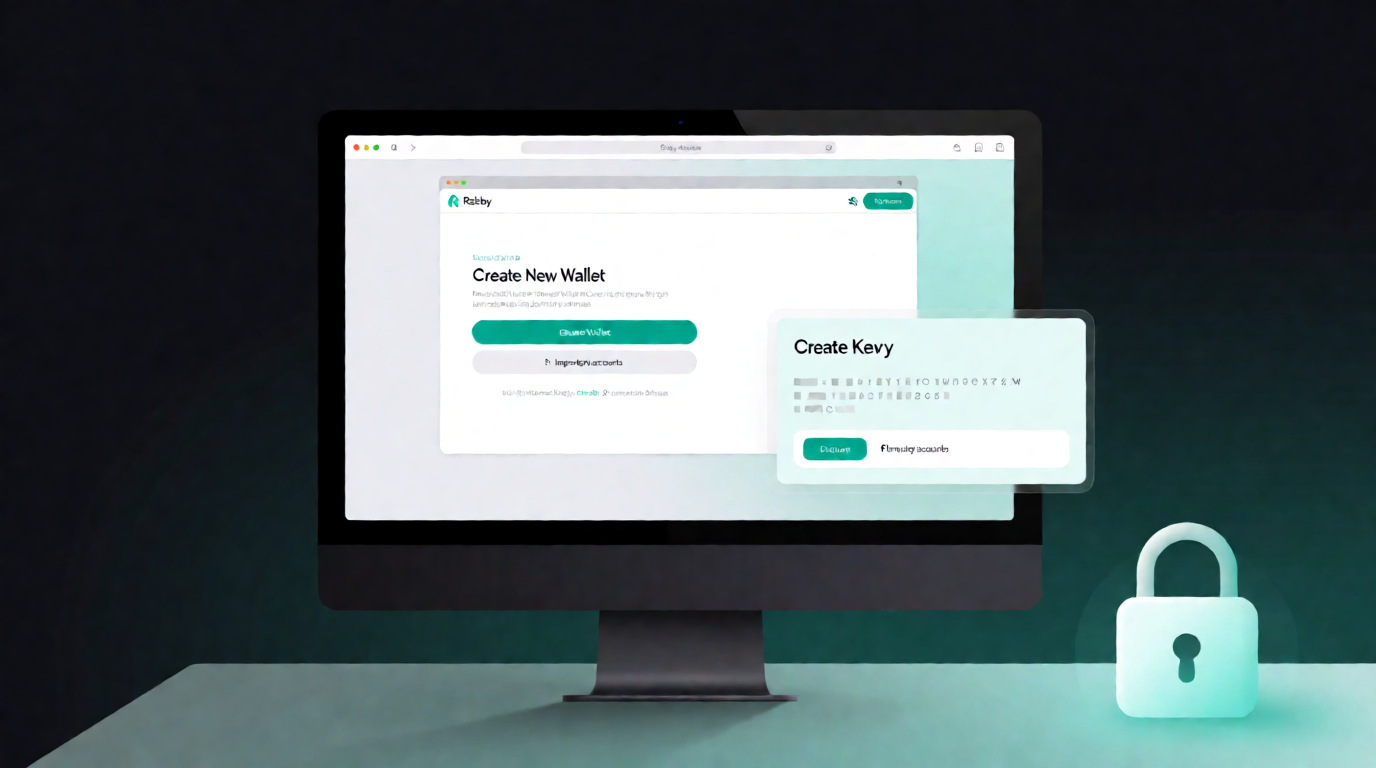
To begin using the Rabby Wallet web version—the browser extension that turns your desktop into a multi-chain hub—safe install starts exclusively at rabby.io. From the official site, select your browser (chrome, firefox, Edge, or Brave) to trigger the rabby wallet download; the store page will guide you through adding the extension. Once installed, click the Rabby icon to reach the rabby wallet login screen, where you create a new wallet or import an existing one with a seed phrase or private key. Your seed phrase is the master key—never share it with anyone. Rabby enforces a mandatory transaction preview before every signature, so you always see exactly what you’re approving, a safeguard DeBank’s security documentation highlights as essential for self-custody.

When evaluating Rabby Wallet web version security, the burning question is: Is Rabby Wallet safer than MetaMask? Rabby's standout simulation engine—lacking in MetaMask—previews transactions before signing, reportedly saving users millions in potential losses. Beyond security, Rabby champions privacy: your data (keys, approvals) is stored locally with no cloud sync, while Watch Mode and pre-sign checks for expired approvals further lock down this fortress. Together, these layers confirm Rabby is not just a good wallet, but a safer, privacy-first choice.
The Rabby Wallet web version — a browser extension — makes multi-chain management effortless: it auto-detects the network when you open any EVM dApp or web app (Arbitrum, Polygon, BSC), so all your crypto across 80+ chains [VERIFY] appears in one unified view. Behind the scenes, its security engine cross-references transactions against DeBank’s database of millions of flagged addresses, silently blocking malicious contracts before they can impact your assets.
The Rabby Wallet web version doesn't collect personal data or report to IRS. With this privacy, you control your keys, but on-chain data is public and can be analyzed by the IRS. Good practice: consult a tax pro; non-custodial wallets don't issue 1099s, so self-reporting is required.
Overall rabby wallet review sentiment is outstanding: backed by 1M+ DeBank users, endorsed by researchers like Tayvano_, and supported via Discord. Unlike the app, the extension is your DeFi hub with a transparent changelog on GitHub. A safer, privacy-first MetaMask alternative with more features.
Frequently Asked Questions
Is the Rabby Wallet web version safe to use on public Wi-Fi?
The Rabby Wallet web version keeps your private keys stored locally, so sensitive data is never broadcast. However, over public Wi‑Fi your transaction requests can still be intercepted. With a VPN, you encrypt the connection, gaining much more privacy. Coupled with Rabby’s simulation engine, this lets you verify every action before signing—cybersecurity best practices for public networks.
Does the Rabby web extension support Bitcoin or only Ethereum and EVM chains?
Rabby Wallet web version, as a browser extension, is purpose-built for Ethereum and EVM-compatible chains (like Polygon, BSC, Arbitrum). It does not natively support Bitcoin's non-EVM network. However, you can manage tokenized versions such as WBTC within supported EVM chains. For direct Bitcoin storage, a separate wallet is required. According to Rabby’s official docs, there are no announced plans for native BTC integration.
How do I troubleshoot 'Pending' transactions in the Rabby web extension?
If a transaction in your Rabby Wallet web version extension stays pending, raise the gas or use 'Speed Up' – with more accurate fee suggestions from the built-in engine, you can avoid this. Also try resetting RPC endpoints (Settings → Developer) and clearing cache. This quick fix, according to official guides, resolves most pending issues while keeping your data and privacy secure.
Can I use the Rabby browser extension without installing the mobile app?
Yes, you can use the Rabby Wallet web version — the browser extension — entirely without installing the mobile app. The extension is fully independent, providing access to all EVM chains, dApps, and DeFi tools directly from your desktop browser. While the Rabby Wallet app is available for iOS and Android as a companion for on-the-go transactions, it is not required for everyday use. Many DeFi power users, including those following DeBank’s best practices, rely solely on the extension for its advanced security features like transaction simulation and local key storage.
Does the Rabby web version reveal my IP address or location to dApps?
The Rabby Wallet web version (browser extension) does not reveal your IP to dApps. However, RPC nodes can see your IP. You can mask it with a custom RPC or VPN—since all data is local, you stay in control. For anonymity, experts recommend a VPN and privacy-focused RPC.
Is Rabby Wallet's web extension compatible with hardware wallets like Ledger and Trezor?
Yes, the Rabby Wallet web version (the browser extension) fully supports hardware wallets like Ledger and Trezor. You can connect your Ledger or Trezor device via the extension’s “Connect Hardware Wallet” option, adding a robust layer of cold-storage security. Once connected, Rabby lets you manage assets across multiple EVM chains directly from your hardware wallet interface, with transaction simulation showing exactly what you’re signing—a feature that sets it apart from many alternatives.